
Has been trusted by
See ximu in Action
Watch how ximu helps brands monitor and optimize their visibility across AI-powered search engines.
The Optimization Funnel
AI platforms are the new first round of decision-making — and a citation without a revenue path is just a fancier ranking screenshot.
Crawled
Can AI crawlers read and index your content.
Cited
Whether your pages show up as a source in AI answers.
Recommended
Whether AI actively recommends you when comparing brands.
The 7 Questions Brand Owners Ask Most
Each question is answered by a specific feature and metric.
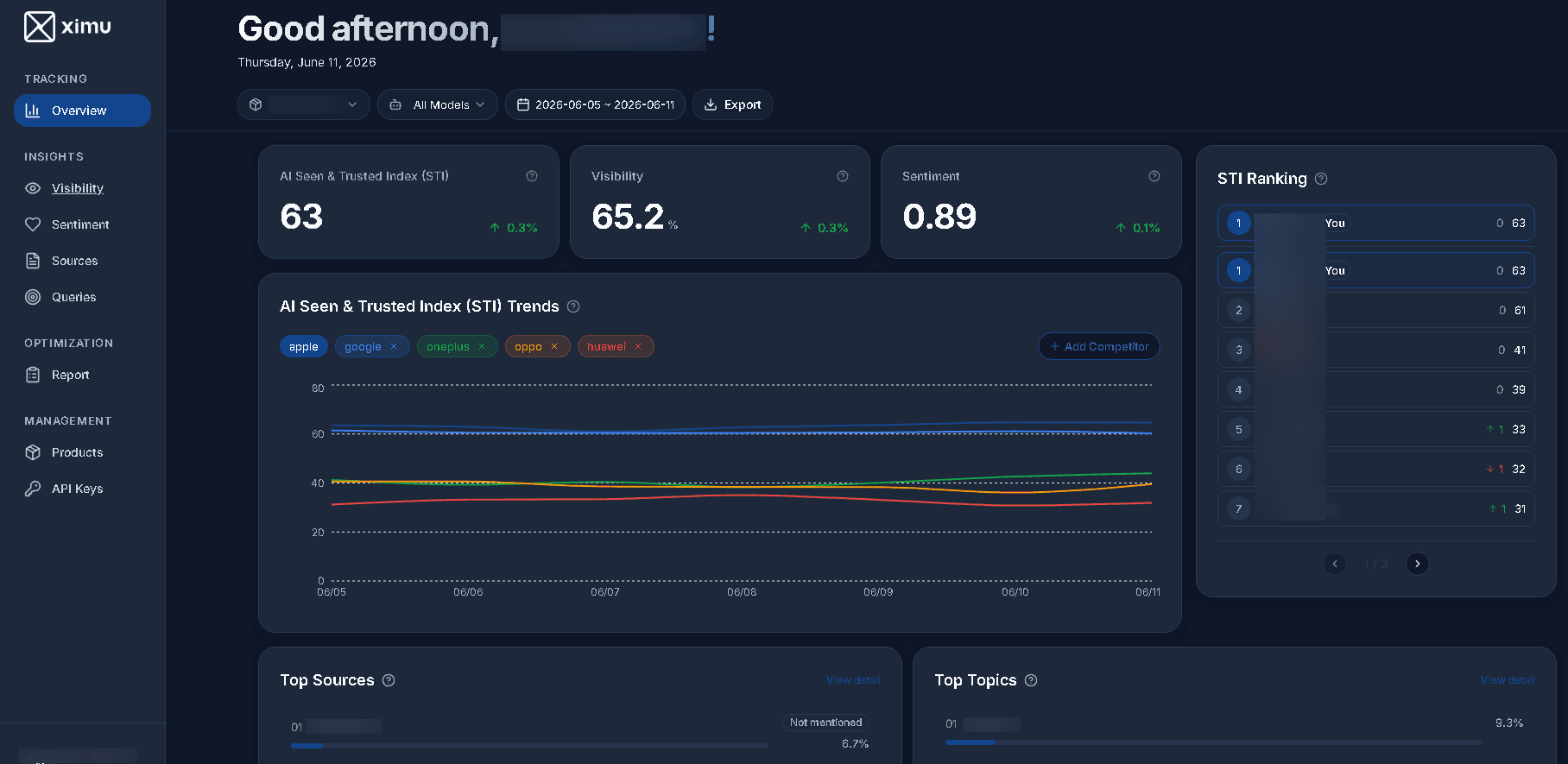
How is my brand's visibility in the AI world actually scored?
Influence quantifies AI exposure and trust in your brand with the STI (Seen & Trusted Index), benchmarked point-by-point against competitors — so you know exactly where the gap is and how big it is.
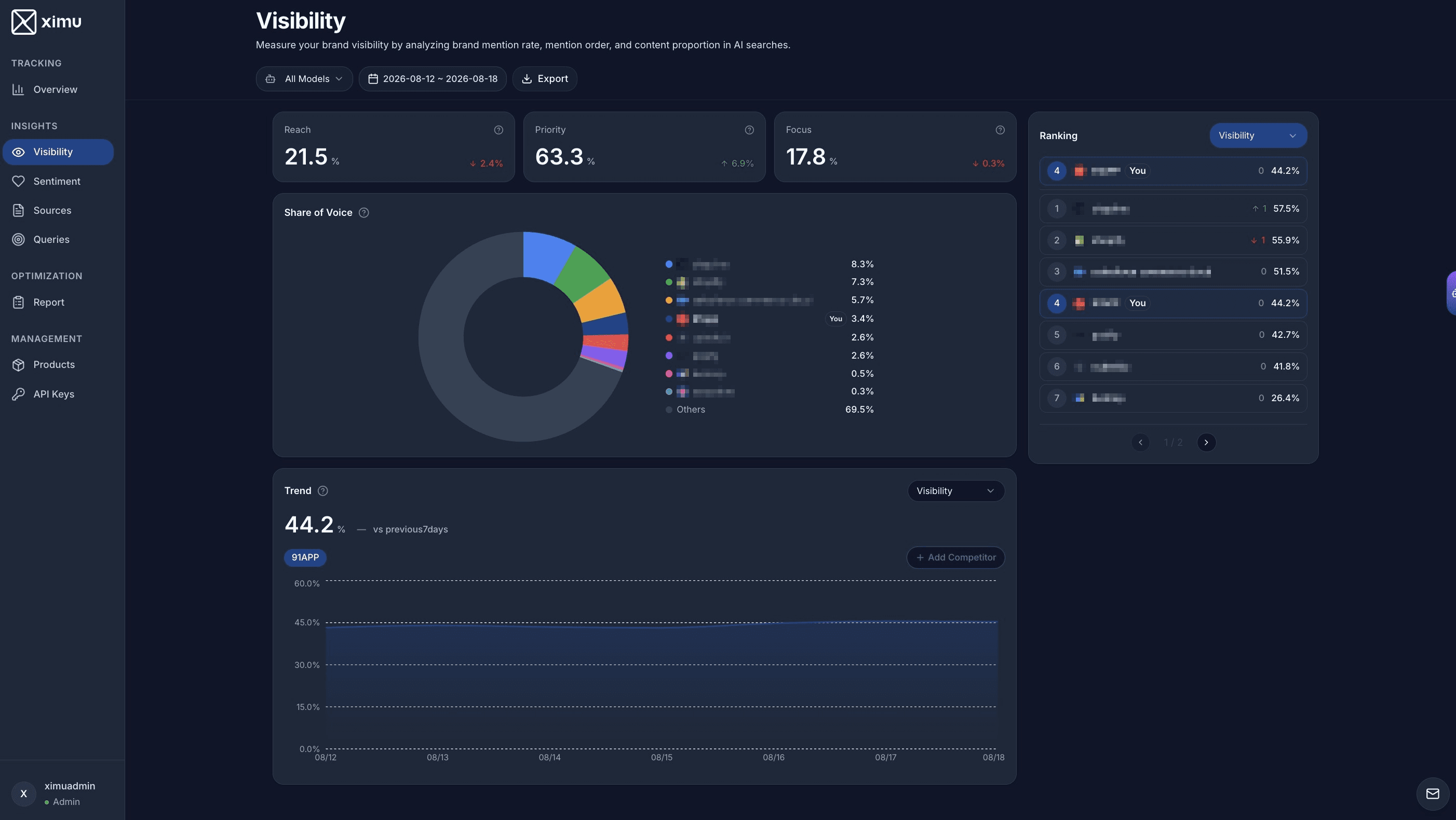
What's the probability my brand gets mentioned in AI answers?
ximu's Visibility metric tracks your brand's mention rate daily across ChatGPT, Gemini, Qwen, DeepSeek, and Doubao for the key queries you define — giving you a clear percentage and trend over time.
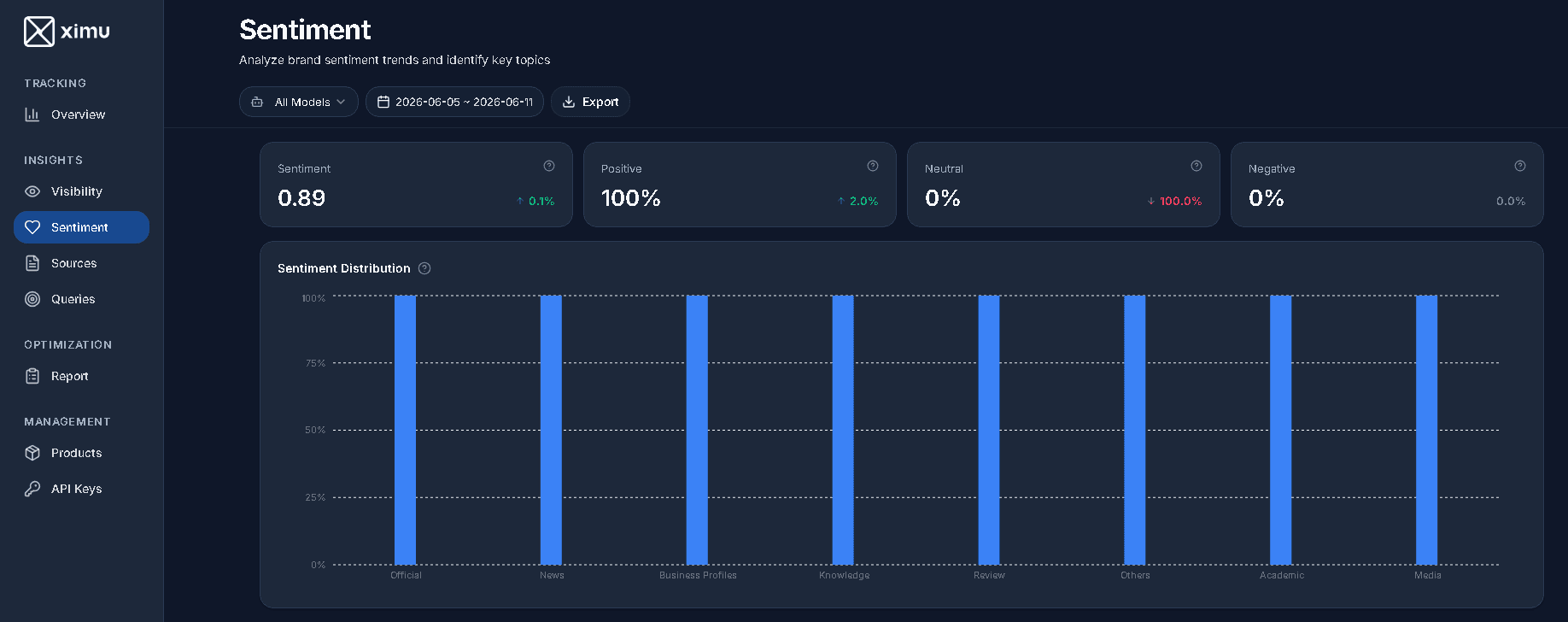
How does AI describe my brand? Good things or bad?
Sentiment classifies how AI answers describe your brand as positive, neutral, or negative, and lists the actual phrases AI uses — so you catch negative narratives early and act on them.
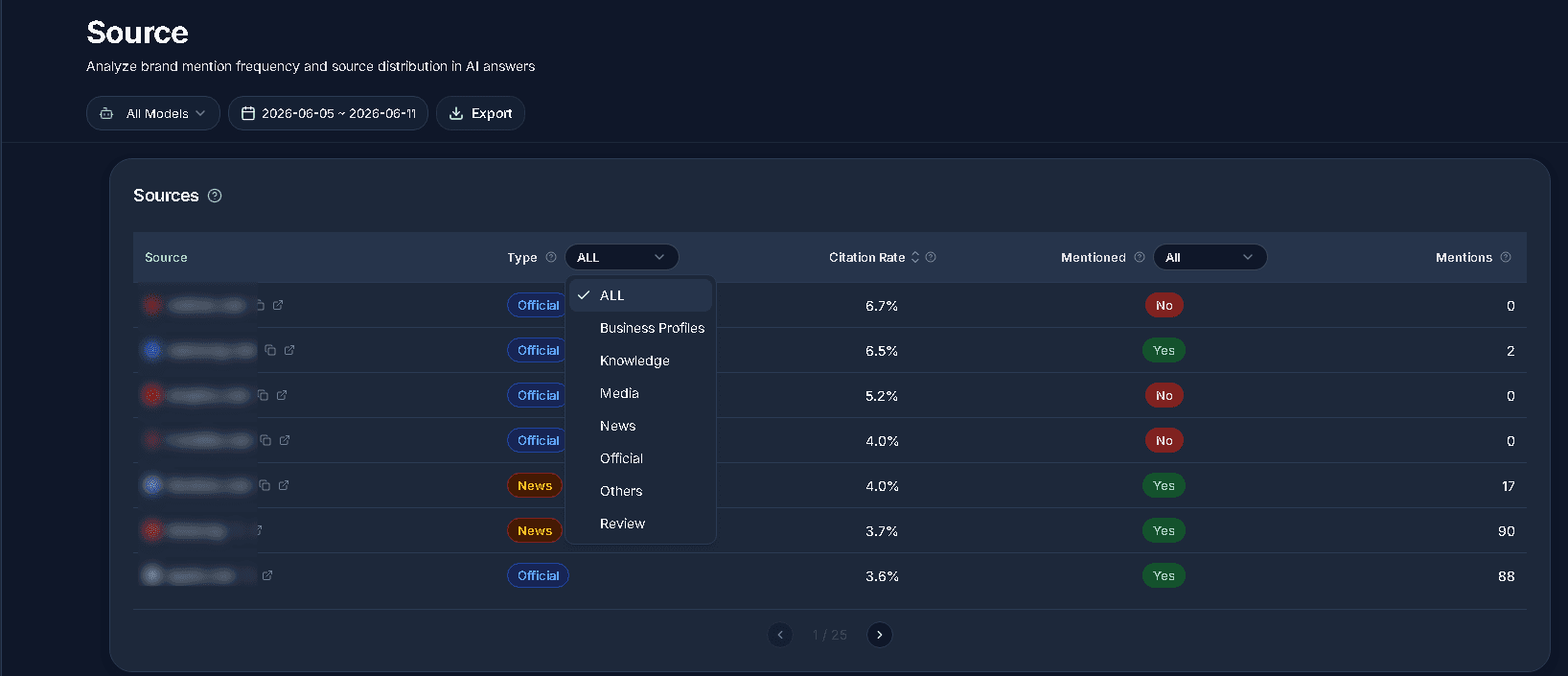
When AI mentions my brand, which sites is it seeing me on?
Sources lists the websites and content AI actually relies on when generating its answers — telling you directly which third-party pages and media outlets to prioritize.
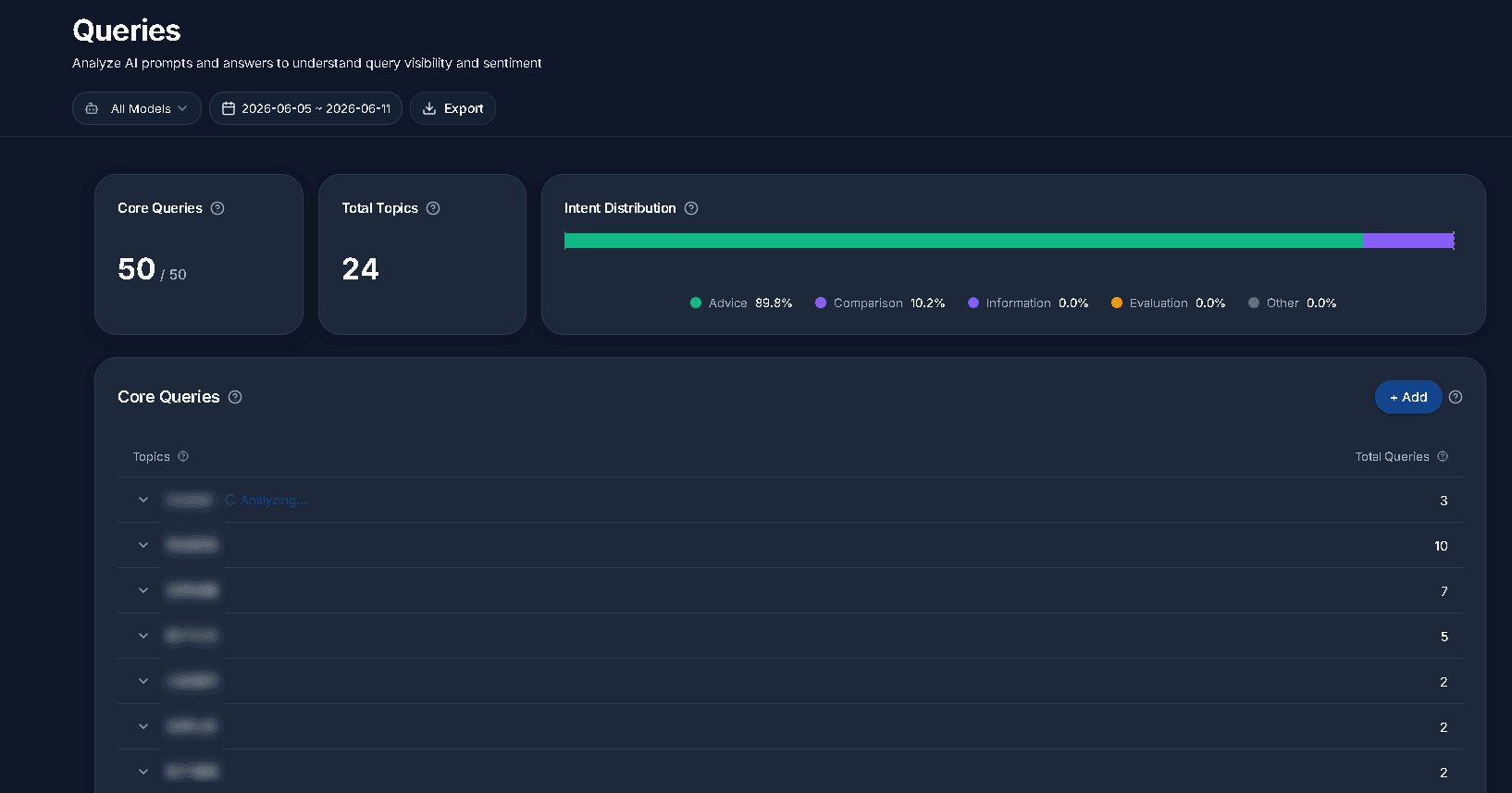
What questions are people actually asking AI?
Queries analyzes real prompts and AI answers to surface high-value queries where your brand still doesn't appear — turning them into a priority list for content planning.
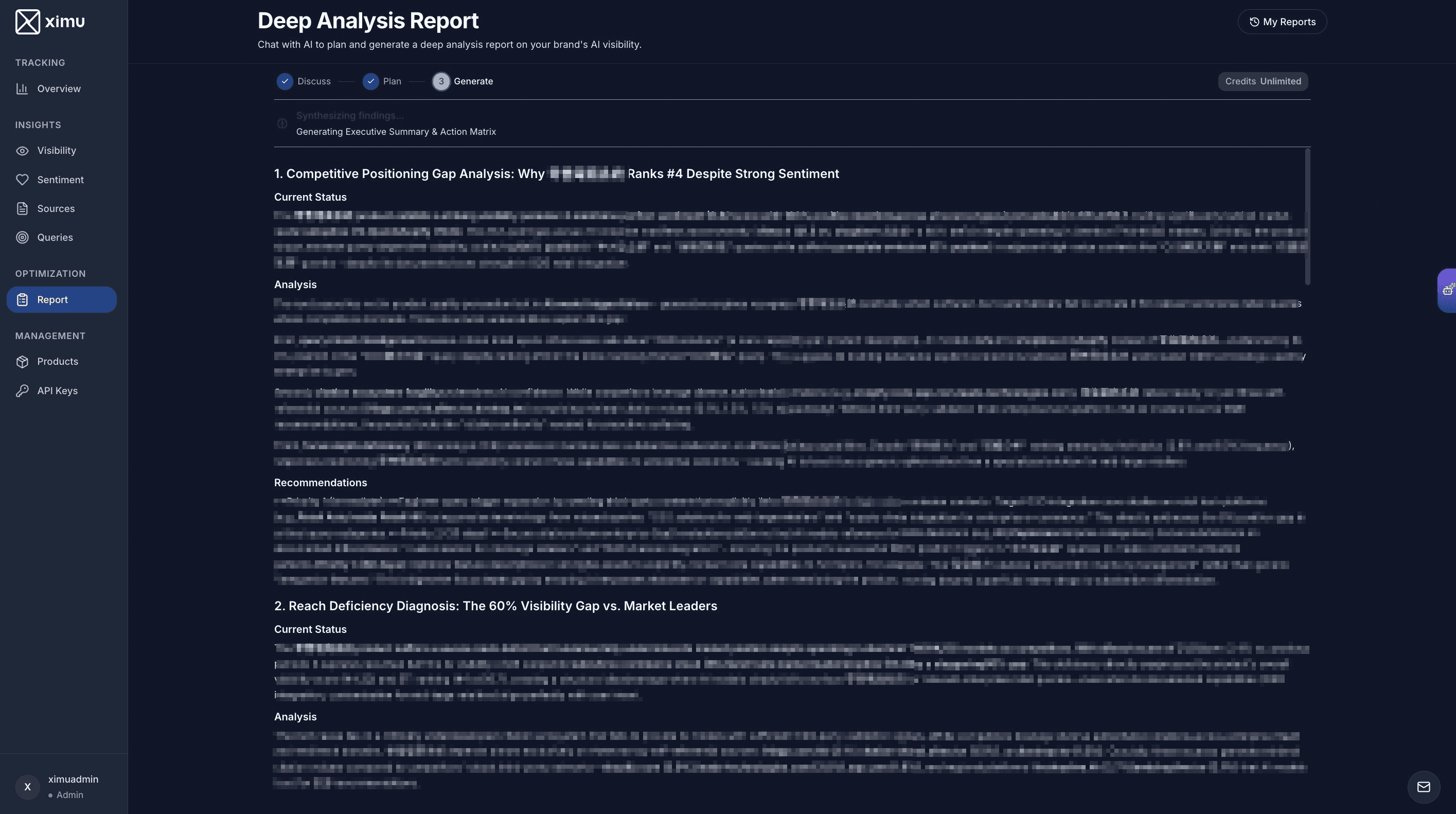
Can a deep analysis report just tell me what to do next?
Deep Analysis Report automatically diagnoses gaps from your monitoring data and produces concrete, actionable recommendations; the ximu Agent and local service team then help you actually execute them — not just hand you another report.
Concretely, how do I optimize?
ximu ships with several dedicated Agents covering site technical architecture, content generation guidance, and third-party platform strategy, paired with a local service team that helps define your optimization direction and executes it in focused 3–6 month cycles — with every step validated back against the monitoring data.
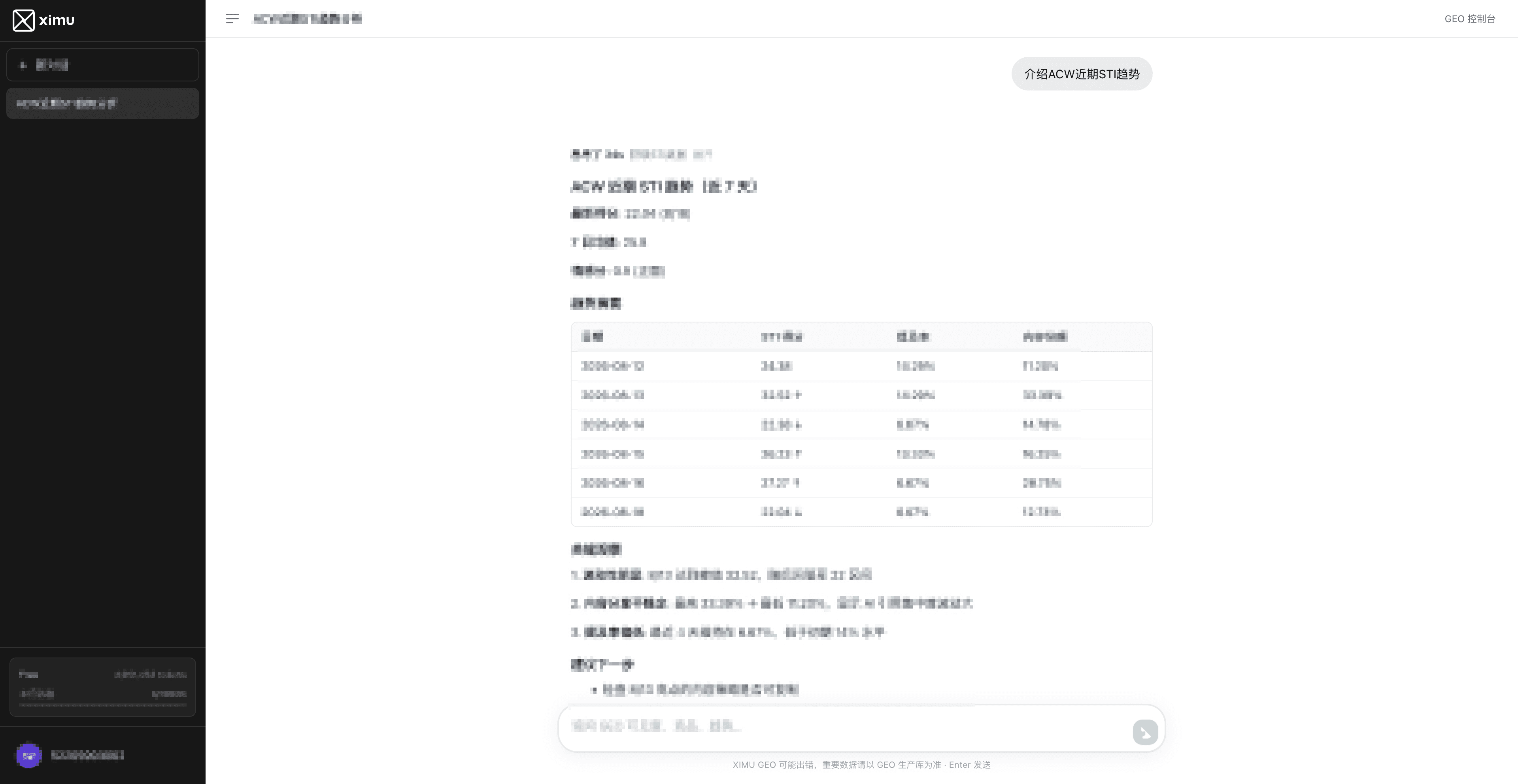
How ximu Works
The ximu Agent and a local service team take your brand from seen, to cited, to recommended.
A technical health check — first, make sure AI can get in
We check robots.txt, llms.txt, and content structure to make sure AI crawlers aren't accidentally locked out.
Know who's speaking for you
Track the source pages AI answers actually cite, so you see exactly who holds your brand narrative right now.
See whether AI recommends you — or your competitors
Monitor your brand's visibility, ranking, and sentiment in AI answers to track the competitive landscape in real time.
Turn AI conversations into concrete action
From insight to action — translate gaps in AI exposure into the next steps for your content and PR team.
Award-Winning, Media-Recognized
Recognized by the industry as the brand infrastructure for the AI era.
The question for brands today is no longer just how to be found — but how to be considered, correctly understood, and become a trusted recommendation the moment AI joins the first round of decision-making.
The ximu Team
In the news
VM Bourgeoisie Bets on AI Productization, Building the ximu Governance Platform
Launches the AI TRUST Brand Influence White Paper and its pioneering STI index to gauge brand visibility inside large language models; ximu enters an Asia-Pacific soft launch backed by a US$1M angel round.
Read articleAs the GEO Market Heats Up, VM Bourgeoisie Leans on Global Cases and 24/7 Ops
Nine months in, VM GEO has served 10+ international enterprises — lifting brand mentions by 300% and AI recommendation rates by 250%, at 50% lower cost than traditional advertising.
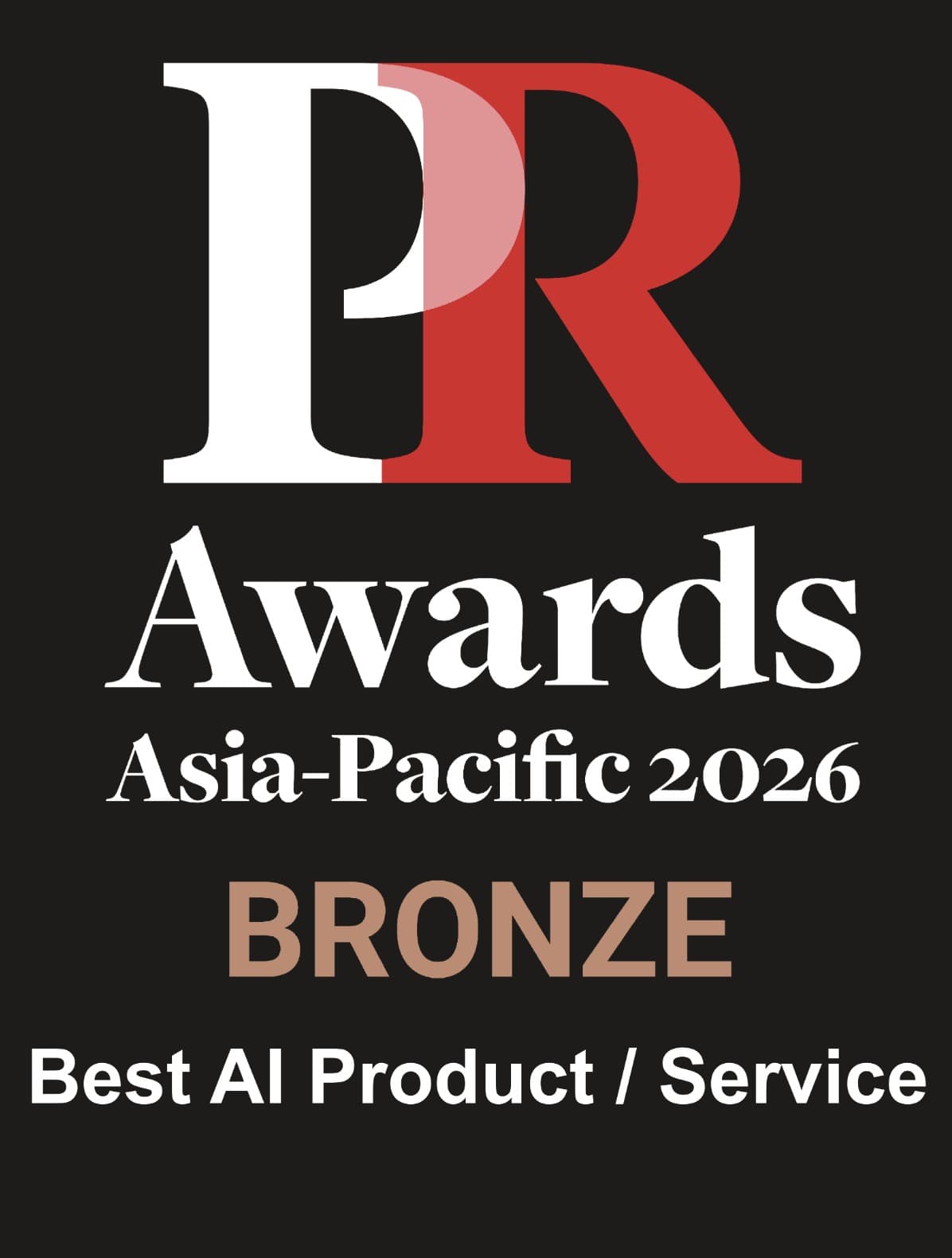
Read articleVM Bourgeoisie Wins the Inaugural "Best AI Product / Service" at PR Awards Asia-Pacific 2026
ximu monitors how brands truly perform inside large language models from an AI-native perspective, earning recognition in the award's first-ever AI Product / Service category.
Read articleGEO FAQ
The questions people ask most about Generative Engine Optimization